

15 Signs Your Dog Might Be Sick (And When to See a Vet)
Dogs can't tell you when something hurts. And by instinct, they'll actively try to hide it. That's why catching illness early depends almost entirely on you - knowing your dog's normal, and spotting when something feels off. This guide covers 15 signs your dog might be sick, which ones can wait a day or two, and which mean drop everything and drive to the vet right now.
Every dog owner has been there: you're watching your dog and something feels off. Maybe they skipped breakfast, or they've been quieter than usual. Maybe they drank a lot of water, or they just don't seem like themselves.
The hard truth is that dogs are masters at hiding discomfort. It's a survival instinct - in the wild, showing weakness makes you a target. So by the time your dog is showing obvious signs of being sick, they may have been struggling for longer than you realize. The vet quote that comes up again and again in dog owner communities? "The biggest mistake I see is owners waiting too long."
This guide cuts through the guesswork. We'll walk through 15 real signs your dog might be sick - including the subtle ones most people miss - and give you clear, vet-backed guidance on when to monitor at home and when to pick up the phone (or car keys) immediately.
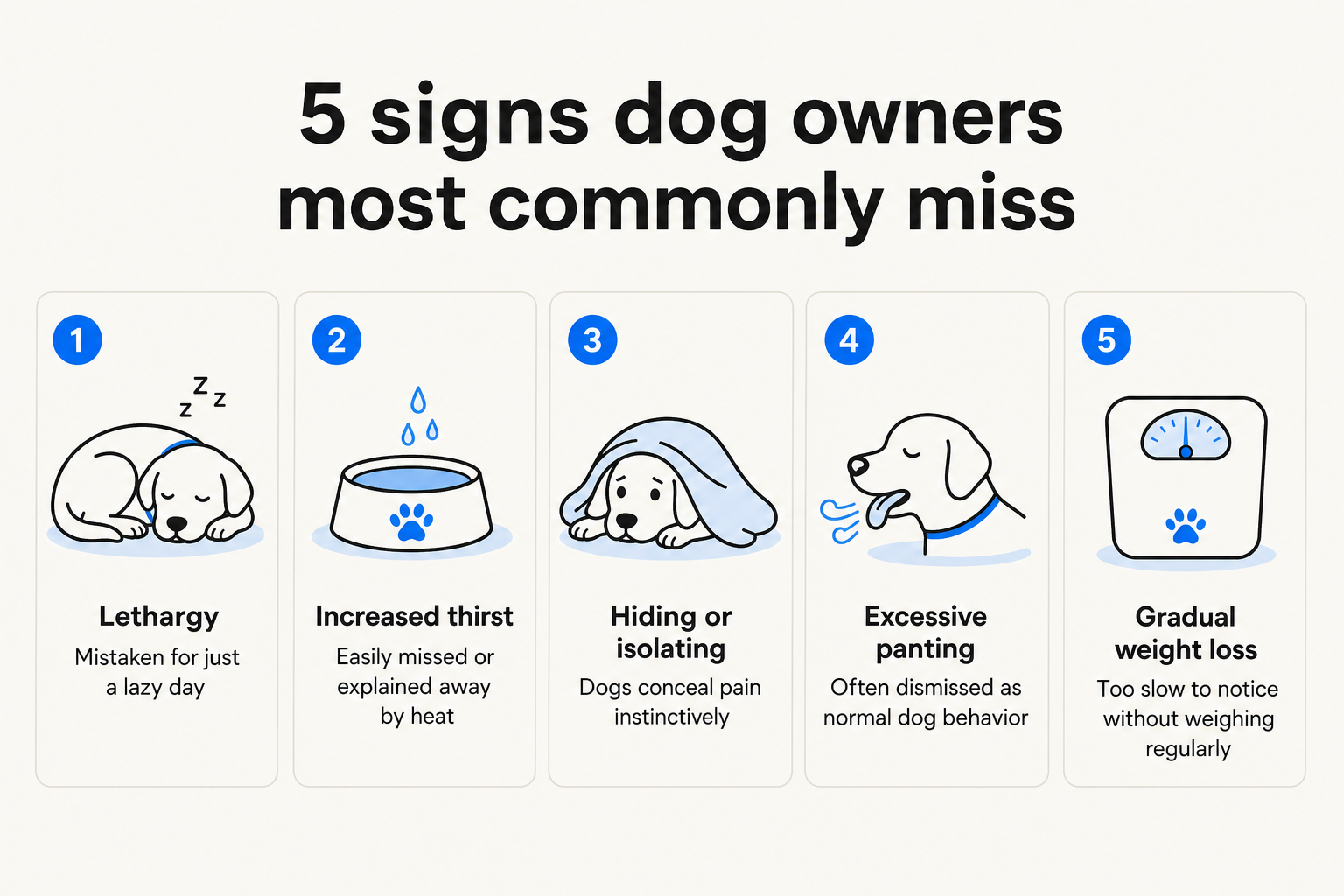
Signs 1–5: The Subtle Ones Most Owners Miss
These five signs are the ones that slip past even attentive owners - because each one, on its own, looks like nothing. Tired day. Warm weather. Picky eater phase. But together, or over a few days, they're your dog's way of quietly asking for help.
Sign 1: Lethargy That Isn't Normal for Your Dog
What it looks like: Your dog is sleeping more, moving slower, not as excited about their walk, or just seems flat. They don't greet you at the door the way they usually do.
Why it's easy to miss: Every dog has lazy days. And some breeds - Basset Hounds, Bulldogs, Saint Bernards - are naturally low-energy. Owners often chalk lethargy up to heat, a big walk the day before, or "just a mood."
When to worry: The key is change from baseline. If your usually-bouncy Labrador won't get off the couch and doesn't perk up even for a walk or their favorite treat, that's significant. Lethargy lasting more than 24–48 hours, or combined with any other symptom, warrants a call to your vet. Lethargy alongside vomiting, pale gums, or difficulty breathing is an emergency.
Lethargy can signal almost any illness - infections, pain, anemia, liver or kidney disease, heart problems - which is exactly why it's worth taking seriously.
Sign 2: Changes in Eating or Appetite
What it looks like: Your dog skips a meal, suddenly loses interest in food they normally love, or - on the flip side - seems ravenously hungry all the time.
Why it's easy to miss: Dogs skip meals sometimes. Picky eaters are common. A skipped breakfast feels like nothing.
When to worry: One skipped meal in an otherwise healthy, active dog who still acts normal? Watch and wait for 24 hours. But if your dog hasn't eaten for more than 24 hours, or if they're refusing food AND showing other signs (lethargy, vomiting, diarrhea), that's when to call the vet.
On the flip side, a sudden increase in hunger can also signal illness - particularly diabetes, Cushing's disease, or intestinal parasites that are literally absorbing your dog's nutrition before they can.
Sign 3: Increased Thirst or Urination
What it looks like: You're refilling the water bowl more often. Your dog is asking to go outside more, or having accidents indoors. They seem thirsty all the time.
Why it's easy to miss: Increased thirst is so gradual that it often takes weeks before owners notice. Hot weather, a saltier food, more exercise - there are lots of easy explanations.
When to worry: Consistent, unexplained increases in thirst and urination that last more than a day or two should always be investigated. This symptom combination - called PU/PD (polyuria/polydipsia) in veterinary terms - is one of the classic signs of diabetes mellitus, kidney disease, Cushing's disease (hyperadrenocorticism), and pyometra (uterine infection in unspayed females). All of these are serious, manageable when caught early, and significantly harder to treat if they progress.
Community experience echoes this: dog owners on r/AskVet frequently report that increased thirst and appetite together were the first clues they noticed before a diabetes or kidney disease diagnosis. Don't dismiss it.
Sign 4: Hiding or Isolating
What it looks like: Your social dog retreats to under the bed, behind the couch, to a back room. They're not coming when called, not interested in interaction, just… disappearing.
Why it's easy to miss: Dogs hide when they're scared (fireworks, thunder) or just need quiet time. It reads as normal behavior. And because dogs instinctively conceal pain, this is one of the most deceptive signs on this list.
When to worry: Hiding that isn't explained by an obvious environmental trigger - a storm, strangers visiting, a recent stressful event - and that lasts more than a few hours deserves attention. Dogs who are hiding AND off their food, OR hiding AND moving stiffly, OR hiding AND not responding to their name, are telling you something is wrong.
This is particularly important with cats (who are even more extreme about hiding illness), but dogs do it too. If your dog is out of character for more than a day, trust your gut.
Sign 5: Excessive Panting Not Related to Heat or Exercise
What it looks like: Your dog is panting heavily while resting indoors. Not after a run, not in hot weather - just panting, persistently.
Why it's easy to miss: Panting is so normal for dogs that it barely registers. It's how they regulate body temperature. So when panting becomes a symptom rather than a reflex, owners often don't catch it.
When to worry: Panting at rest, or panting that seems disproportionate to the temperature or activity level, can indicate: pain (panting is one of the most common pain signals in dogs), anxiety disorders, heart disease, Cushing's syndrome, respiratory problems, or fever. If your dog is panting heavily at rest and also shows any other symptom - reluctance to move, a distended belly, unusual posture - this becomes more urgent.
Heavy panting combined with a bloated abdomen and unproductive retching is a GDV emergency (see Sign 10). Don't wait.
Signs 6–10: Physical Changes That Warrant a Vet Call
These signs involve observable physical changes - things you can see or hear. They're easier to spot than the behavioral signs above, but they can still be misread or explained away.
Sign 6: Vomiting
What it looks like: Your dog vomits once, or repeatedly, with or without food or bile.
The nuance: A single vomiting episode in an otherwise normal dog isn't automatically a crisis. Dogs vomit when they eat grass, eat too fast, eat something that disagrees with them. But repeated vomiting - especially multiple times in a day, or over multiple days - is a different story entirely.
When to worry: Go to the vet if vomiting:
-
Happens more than 2–3 times in 24 hours
-
Contains blood (bright red or dark/coffee-ground-like)
-
Is accompanied by lethargy, a bloated abdomen, or obvious distress
-
Is happening in a puppy or elderly dog
-
Continues for more than 24 hours even if infrequent
Repeated vomiting can signal gastroenteritis, intestinal obstruction (especially in dogs who chew things), pancreatitis, kidney or liver disease, parvovirus, or GDV (bloat). Many of these escalate quickly.
Sign 7: Diarrhea
What it looks like: Loose or liquid stools, increased frequency, straining, or urgency.
The nuance: Like vomiting, a single bout of soft stool isn't always cause for immediate panic - dietary indiscretion (eating something they shouldn't) is common and usually self-resolving.
When to worry: See a vet promptly if diarrhea:
-
Contains blood or is very dark/tarry
-
Is accompanied by vomiting, lethargy, or loss of appetite
-
Persists for more than 48 hours
-
Is happening in a puppy (dehydration risk is severe and fast)
-
Causes your dog visible distress or weakness
Bloody diarrhea with lethargy can indicate hemorrhagic gastroenteritis (HGE), parvovirus, intestinal parasites, or a serious systemic illness - none of which should wait.
Sign 8: Unexplained Weight Loss
What it looks like: Your dog looks thinner than usual. Their ribs are easier to feel. Their waist is more pronounced. Their collar feels looser.
Why it's easy to miss: Gradual weight loss happens slowly - you see your dog every day, so a 5-10% body weight loss over a month can go completely unnoticed. The only reliable way to catch this early is to weigh your dog regularly.
When to worry: Weight loss of more than 10% of body weight without a change in diet is almost always significant. Combined with increased hunger, it suggests conditions where the body can't absorb nutrition despite eating: intestinal parasites, inflammatory bowel disease, exocrine pancreatic insufficiency, or diabetes. Weight loss with decreased appetite points toward dental disease, cancer, kidney disease, or systemic infection.
Vets recommend monthly weigh-ins at home (use a scale and weigh yourself holding the dog, then weigh yourself alone) as one of the simplest ways to catch early illness.
Sign 9: Coughing or Difficulty Breathing
What it looks like: Persistent coughing, honking cough, wheezing, labored breathing, or breathing with an open mouth when not panting.
The nuance: A brief cough when drinking water or eating too fast isn't unusual. But repeated coughing, or any sign of labored breathing, needs to be investigated.
When to worry:
-
Any breathing difficulty is urgent - breathing is non-negotiable
-
A "goose honk" cough in small breeds often indicates collapsing trachea
-
A wet, productive-sounding cough can indicate pneumonia or heart failure
-
Open-mouth breathing at rest in dogs (especially brachycephalic breeds like Bulldogs) warrants urgent care
-
Blue or grey gums alongside breathing difficulty is an immediate emergency - see Sign 13
Respiratory symptoms can deteriorate quickly. If in doubt, call your vet or head to emergency.
Sign 10: Bloated or Distended Abdomen
What it looks like: Your dog's belly looks swollen, tight, or rounder than normal. They may be retching repeatedly without vomiting anything up. They may seem restless, anxious, or in obvious distress.
This one is life-threatening: What you're looking for here is Gastric Dilatation-Volvulus (GDV), commonly called bloat. The stomach fills with gas and can twist on itself, cutting off blood supply. Without emergency surgery, GDV is fatal. Mortality rates range from 10–45% even with treatment.
Large, deep-chested breeds - Great Danes, German Shepherds, Dobermans, Weimaraners, Standard Poodles - are at highest risk. Dogs over 100 lbs have roughly a 20% lifetime risk of developing GDV. But it can happen to any dog.
Signs of GDV:
-
Visibly distended abdomen (especially if it looks hard or drum-like)
-
Unproductive retching (trying to vomit but bringing nothing up)
-
Restlessness, inability to get comfortable
-
Excessive drooling
-
Rapid deterioration in condition
If you suspect GDV: Do not wait. Do not call and wait for a callback. Drive to the emergency vet immediately. Every minute matters.
Signs 11–15: Red Flags That Mean Go Right Now
These five signs are emergencies. There is no "watch at home" here. Any one of them is a reason to go straight to your vet or emergency animal hospital.
Sign 11: Seizures
What it looks like: Your dog suddenly falls, loses control of their body, paddles their legs, stiffens, shakes uncontrollably, chomps their jaw, loses consciousness, or urinates/defecates involuntarily. It usually lasts 30 seconds to 2 minutes. After the seizure, your dog may seem confused, wobbly, blind, or exhausted for several minutes to hours (the post-ictal phase).
Why it's terrifying: A seizure is one of the most frightening things to witness as a dog owner. It looks devastating. The good news: most seizures in dogs are not immediately fatal. The bad news: they always need to be evaluated.
When it becomes a true emergency:
-
A single seizure lasting more than 2–5 minutes (status epilepticus)
-
Multiple seizures in a 24-hour period (cluster seizures)
-
Seizures in a dog with no prior diagnosis
Even a first seizure that resolves on its own needs same-day vet evaluation. Seizures can be caused by epilepsy (manageable with medication), brain tumors, liver disease, toxin ingestion, low blood sugar, or electrolyte imbalances - all of which need investigation.
While your dog is seizing: stay calm, move objects away so they can't hurt themselves, don't put your hands near their mouth (they can bite involuntarily), and time the seizure. Record video if you can - it helps your vet enormously.
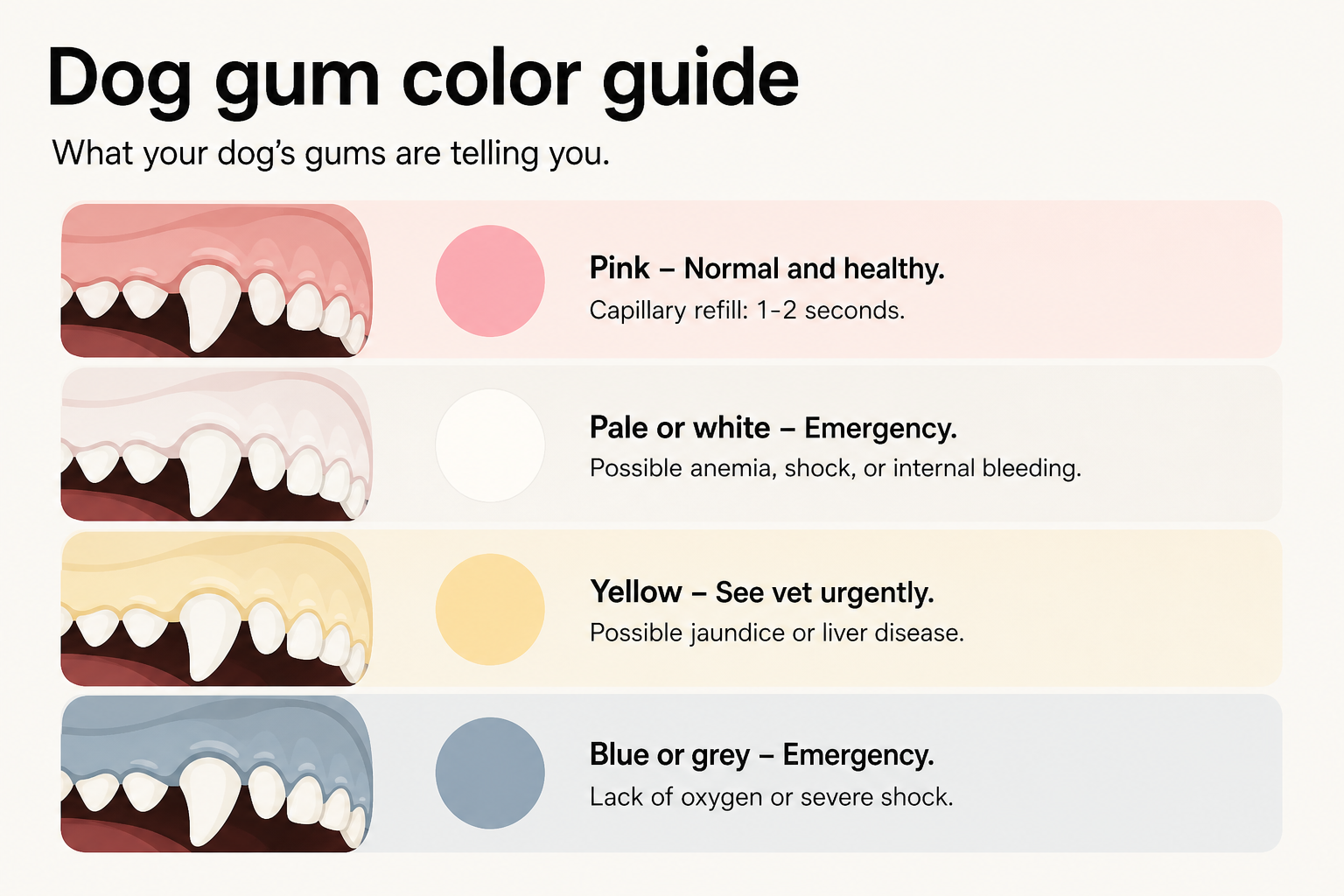
Sign 12: Pale, White, Yellow, or Blue Gums
What it looks like: When you lift your dog's lip and look at their gums, you don't see the normal bubblegum pink. Instead: white, very pale, grey, yellow, or blue-tinged gums.
Why this matters: Your dog's gum color is one of the fastest and most reliable indicators of what's happening internally. Healthy gums are pink and moist, and when you press on them with your finger, the white spot should return to pink in 1–2 seconds (this is the capillary refill test).
What each color means:
-
Pink: Normal. Healthy circulation.
-
Pale or white: Anemia, internal bleeding, shock, or immune-mediated hemolytic anemia (IMHA). Emergency.
-
Yellow (jaundiced): Liver disease, bile duct obstruction, or red blood cell destruction. See a vet urgently.
-
Blue or grey: Insufficient oxygen in the blood. Respiratory or cardiovascular crisis. Emergency.
-
Bright red: Possible heat stroke, sepsis, or toxin exposure. Emergency.
Make checking your dog's gums a habit - once a week takes 10 seconds and could save their life. Learn their normal color so you can spot a change immediately.
Sign 13: Collapse or Sudden Weakness
What it looks like: Your dog suddenly falls down, can't stand, loses the ability to use their hind legs, or collapses and can't get back up.
This is always an emergency. Collapse can be caused by: heart arrhythmia, internal bleeding, severe anemia, spinal cord injury, severe pain, toxin ingestion, hypoglycemia (especially in small dogs and puppies), heat stroke, or Addisonian crisis (adrenal gland failure).
Some dogs who collapse recover briefly - they'll stand back up, seem okay, and owners breathe a sigh of relief. Don't be fooled by apparent recovery. The underlying cause is still there and needs immediate evaluation. A dog who collapses and recovers can re-collapse, sometimes fatally.
If your dog collapses: keep them still, keep them warm, call ahead to your emergency vet, and go immediately.
Sign 14: Suspected Toxin Ingestion
What it looks like: You find evidence your dog ate something they shouldn't have - chocolate, grapes, raisins, xylitol (found in sugar-free gum, peanut butter, and baked goods), rat poison, antifreeze, medications (human or pet), certain houseplants, or other known toxins. Or your dog is showing sudden neurological symptoms, vomiting, weakness, or collapse and you don't know why.
The scale of this problem: The ASPCA Animal Poison Control Center received 401,550 calls in 2021 alone - a 22% increase from the year before. An estimated 10,000 dogs die every year from antifreeze (ethylene glycol) ingestion. The window for effective treatment is often very narrow.
What to do:
-
Note what they ate (or take a photo of the packaging), when, and how much
-
Call the ASPCA Animal Poison Control Center: (888) 426-4435 (available 24/7; consultation fee may apply)
-
Or call your emergency vet immediately
-
Don't induce vomiting unless specifically instructed by a vet or poison control - this can make some ingestions worse
Common toxins dog owners don't realize are dangerous: grapes and raisins (can cause kidney failure), xylitol (causes life-threatening hypoglycemia and liver failure), macadamia nuts, onions and garlic (cause anemia), certain mushrooms, and some common garden plants including sago palm, azalea, and oleander.
Sign 15: Difficulty Urinating or No Urination
What it looks like: Your dog is squatting or posturing to urinate but producing little or nothing. They seem to be straining. They may be licking at themselves, crying out, or showing obvious discomfort. Male dogs in particular may seem restless and unable to get comfortable.
Why this is urgent: A complete urinary blockage - most common in male dogs - is a life-threatening emergency. If the bladder can't empty, toxins back up into the bloodstream. Within 24–48 hours, this can be fatal. A dog who is straining to urinate and producing nothing should be treated as an emergency.
The key distinction:
-
Straining to urinate with small amounts coming out, with blood, or with obvious pain → urgent vet visit (could be UTI, bladder stones, or early blockage)
-
Straining with nothing coming out, extreme restlessness, distended belly → emergency vet immediately
In female dogs, watch also for a cloudy, smelly discharge combined with lethargy and increased thirst - this can indicate pyometra, a life-threatening uterine infection that requires emergency surgery.
Knowing Your Dog's Normal Is Everything
All of this comes back to one thing: you can only spot abnormal if you know what normal looks like for your specific dog.
Every dog is different. A Greyhound running at 38°C and looking gaunt is healthy for them; the same presentation in a Lab would be alarming. Your senior Basset who always sleeps ten hours a day getting twelve isn't the same as your Border Collie suddenly collapsing into lethargy.
Here's what vet professionals recommend for baseline home monitoring:
-
Monthly weight check - weigh yourself holding your dog, then without
-
Weekly gum check - 10 seconds, learn their pink
-
Routine observation - drinking patterns, appetite, energy, bathroom habits
-
Annual (or biannual for seniors) vet checkups - bloodwork catches things you can't see
The goal isn't to become hypervigilant or anxious about every sneeze. It's to know your dog well enough that when something shifts, you notice. That early awareness is what makes the difference between a manageable illness and a crisis.
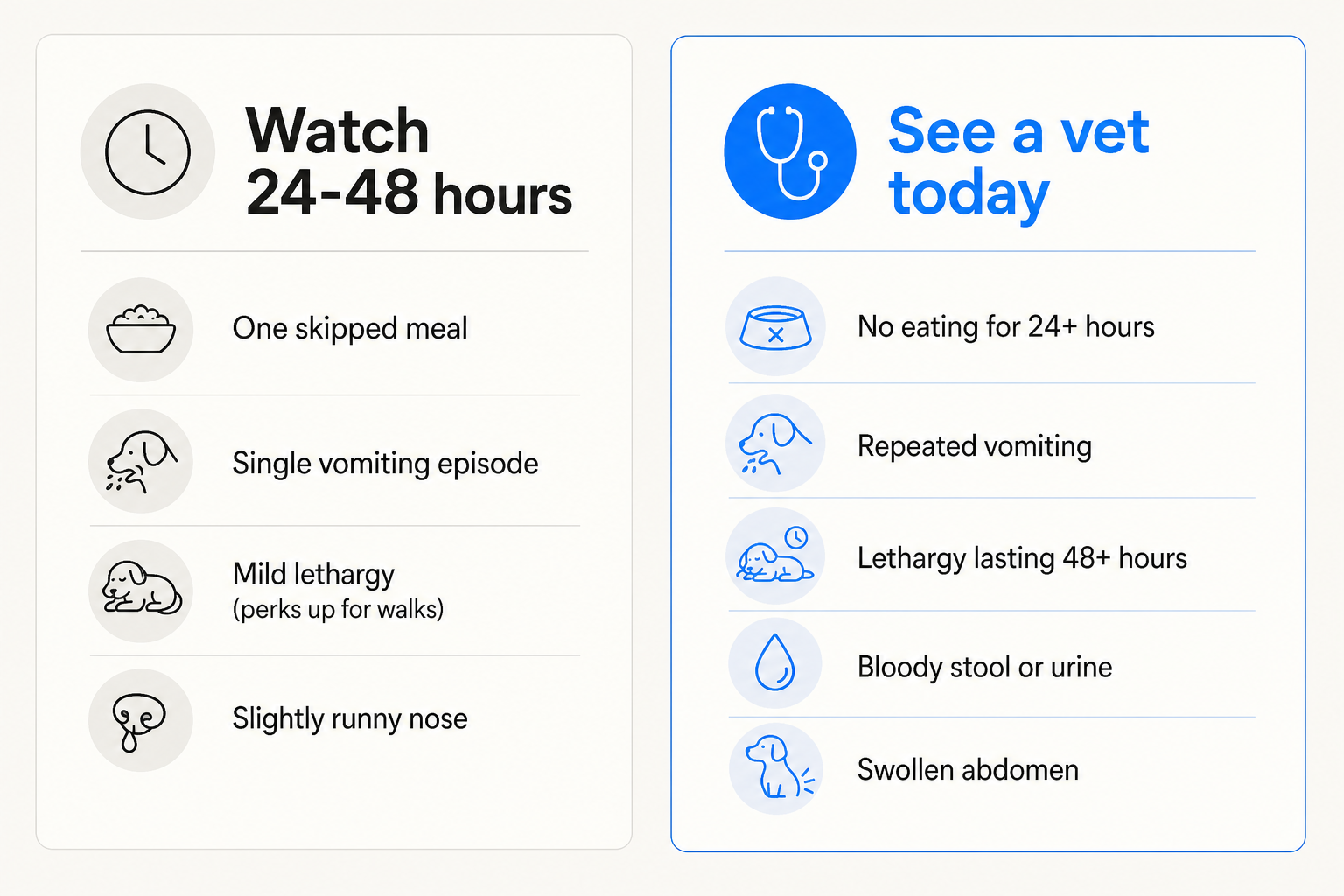
When to Watch at Home vs. When to Go
To pull it all together:
Watch at home for 24–48 hours if your dog:
-
Skipped one meal but is otherwise acting normal
-
Had a single vomiting episode with no blood
-
Has mildly soft stools but no blood and seems fine
-
Is slightly less energetic than usual but responds to stimulation
Call your vet today (or within a few hours) if your dog:
-
Hasn't eaten for 24+ hours
-
Has vomited multiple times in a day
-
Has had diarrhea for more than 48 hours
-
Has been lethargic for 24+ hours with no improvement
-
Is drinking significantly more than usual for more than a day or two
-
Has lost noticeable weight without a diet change
-
Is coughing persistently
Go to emergency immediately if your dog:
-
Has pale, white, blue, or yellow gums
-
Has collapsed or can't stand
-
Has a distended abdomen with unproductive retching
-
Is having a seizure lasting more than 2–5 minutes, or multiple seizures
-
Is struggling to breathe or breathing with open mouth at rest
-
Is straining to urinate and producing nothing
-
May have ingested a toxin
-
Is in obvious, severe distress
When in doubt, call your vet's emergency line. They would always rather you call than wait.
About Pawmingos
At Pawmingos, we're building something for dog and cat people — by dog and cat people. We started with mini brick building sets shaped like your favorite dog breeds (yes, you can build a tiny Husky. Yes, it's as good as it sounds). But this blog is here for something broader: a real community space where pet owners can find honest, useful guidance about caring for the companions they love.
Because whether you're snapping bricks together or rushing to the emergency vet at midnight, what drives you is the same thing — you love your pet.
That belief also shapes how we do business. With every purchase, a portion of our profits is donated to registered animal shelters and legitimate pet rescue organizations around the world, helping provide care, food, and second chances to animals still waiting for a loving home.
We'll keep creating products that bring joy, publishing content that treats you like the smart, caring owner you are, and supporting organizations that make a real difference for pets in need.
→ Visit us at pawmingos.com
👉 Explore the Pawmingos Collection — build a companion, and help a real one find home.
Frequently Asked Questions
How do I know if my dog is seriously ill?
Watch for emergency signs like difficulty breathing, pale or blue gums, collapse, seizures, or a bloated abdomen. These require immediate emergency vet care - don't wait overnight. For milder symptoms like a skipped meal or minor lethargy, you can watch at home for 24-48 hours, but if they don't improve or worsen, call your vet.
What are the early signs a dog is sick?
Early signs are often subtle: a single skipped meal, mild lethargy (still wags tail when called), slight changes in thirst or urination, hiding more than usual, or soft stools. These alone may not be emergencies, but two or more symptoms together - or any symptom lasting more than 48 hours - is a reason to call your vet.
Can dogs hide that they're in pain?
Yes - this is one of the most important things dog owners need to know. Dogs are hardwired by instinct to conceal pain and weakness. By the time a dog is visibly suffering, they've often been uncomfortable for a while. This is why behavioral changes (hiding, going quiet, less interest in play) are often the earliest and most reliable signals something is wrong.
What color should a healthy dog's gums be?
Healthy dog gums should be a bubblegum pink color, and when you press on them, the color should return within 1-2 seconds (the 'capillary refill test'). Pale, white, grey, yellow, or blue-tinged gums are all medical emergencies requiring immediate vet attention.
When should I take my dog to an emergency vet?
Go to an emergency vet immediately if your dog is: struggling to breathe, has pale/white/blue gums, has a distended abdomen with unproductive retching, has had a seizure lasting more than 2-5 minutes, has collapsed, has ingested a known toxin, or has bloody vomit or diarrhea with weakness. When in doubt, call your emergency vet line - they'll tell you whether to come in.
Sources: PetMD (Dr. Sandra C. Mitchell DVM), American Veterinary Medical Association (AVMA), VCA Animal Hospitals, BluePearl Veterinary Partners, Preventive Vet, Brown Veterinary Hospital, Northeast Veterinary Referral Hospital. ASPCA Animal Poison Control Center: (888) 426-4435.